
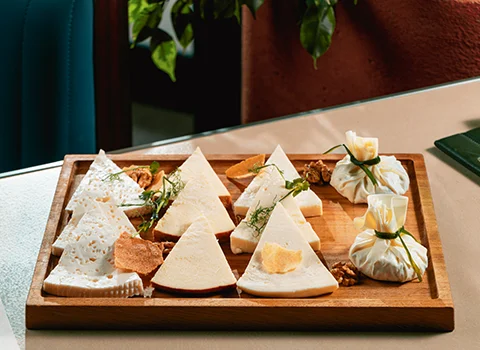
The Best Georgian Cheese Board in Tbilisi
Cheese has long been one of the most beloved ingredients in traditional Georgian cuisine. Historically, bread and cheese (along with wine, of course!) were the most basic elements of everyday nutrition. Even so, serving a carefully curated cheese board is a relatively modern idea for Georgian restaurant culture. While a traditional Georgian Supra was nearly unimaginable without cheese, combining multiple varieties was rare and there were never strict requirements for how to deliberately pair them with other ingredients based on specific attributes.
Today, however, many restaurants serving Georgian cuisine (in Tbilisi, at least) tend to include a cheese board on their menus. The Tsiskvili Group restaurants are among them, putting a special emphasis on carefully selecting the cheeses, adhering to high standards. Guests who order our cheese board have an opportunity to taste premium versions of some of the most popular Georgian cheese varieties, thoughtfully assembled to highlight their distinct flavors and textures.
What Are the Rules for Assembling a Proper Cheese Board?
To those unfamiliar with the details, assembling a cheese board may appear simple. After all, the internet offers hundreds of examples and countless combinations. In reality, a classic European-style cheese board actually needs to follow strict gastronomic standards - at least when assembled at professional level.
First, the board calls for at least three types of cheese. The goal is to allow guests to experience a full spectrum of flavors during tasting. Most often, this means selecting one soft cheese, one semi-firm variety, and one aged (or piquant) cheese with a stronger flavor. For example, a very basic typical European cheese board would be a small wheel of Brie at the center, with slices of Gouda arranged on one side, and small chunks of Roquefort on the other. In this specific combination, Brie is responsible for the milder flavor and soft, creamy texture; Gouda is the semi-firm cheese with stronger (but not necessarily sharp) nutty aroma; and Roquefort provides the strong, piquant accent.
The more cheese varieties are added, the more important it becomes to maintain a clear progression of flavor and texture. It’s not a good look for two cheeses to be responsible for the same flavor profile. A properly assembled cheese board will have taste and aroma gradually intensifying from one variety to the next, ensuring that each bite introduces something new to the palette, not a repeat of the previous experience.
So, when assembling a board the goal is not to just have a bunch of tasty cheese, but make sure that it’s not composed of entirely of one type or closely related varieties, be it all soft cheeses (Brie, Camembert, Reblochon), strong aged cheeses (Manchego, Gruyère, Parmesan), or blue cheese combinations even if their textures differ (no need for Roquefort or Gorgonzola on the same cheese board). Flavors must balance each other, with each cheese type adding a new dimension to the tasting experience.
How Tsiskvili Assembled its Georgian Cheese Board
At Tsiskvili, we adapted these European principles to the traditions of Georgian cheesemaking. Our selection of Georgian cheese varieties is designed to provide a ranged but well-balanced experience of flavors while avoiding unpleasant contrasts. Our standard Georgian cheese board currently includes the following types:
- Sulguni: Likely, the best-known Georgian cheese as of right now. Sulguni is often compared to Italian mozzarella. It belongs to the “pasta filata” family, meaning the cheese mass is heated, kneaded, and stretched during the cheesemaking process. If properly prepared, sulguni develops an elastic, layered structure with a smooth surface. It should have a delicate aroma, a mildly salty, slightly tangy flavor, and a soft, supple texture.
- Imeretian cheese: The most popular and widely used variety, Imeretian cheese is a type of green cheese, only aged 2 or 3 days. It has a delicate, porous texture and moderate salinity. Good Imeretian cheese should never be overly salty since extra salt reduces elasticity and creates a firm, grainy structure. When it comes to the cheese board, Imeretian variety with its clean, milky taste and medium firmness plays a transitional role between the milder and sharper flavors.
- Smoked sulguni: Smoking transforms the aroma and structure of standard sulguni so significantly that it effectively becomes an entirely new cheese. Smoked sulguni is semi-firm, with a dense layered texture that easily pulls apart into strands. It has a distinctly salty taste and a strong smoky aroma. Smoked sulguni serves as the sharper, more piquant element - think of it as adding a Gruyère or even Roquefort for the European cheese board. While having two sulguni varieties on the board may sound redundant, because of such profound transformation, having both regular and smoked sulguni side by side is, usually, entirely justified (the kinks depend on the producers the cheeses are sourced from).
- Nadughi (wrapped in sulguni sheets): A relatively new addition to our cheese board and currently available exclusively at “Tsiskvili Terrace.” Nadughi is a soft, creamy cheese made from whey through secondary processing. It resembles European ricotta in both texture and flavor. It is one of the board’s most contrasting elements: soft and delicate structure but with quite an expressive flavor, especially since it’s traditionally generously seasoned with mint and wrapped in a thin sulguni sheet. At Tsiskvili, we serve nadughi in a more contemporary interpretation: instead of rolling them into the traditional cone shape, the sulguni sheets are folded into small round sacks and tied at top.

Why Tushetian Guda Isn’t on Tsiskvili Cheese Board
Guda cheese is one of the most complex products of Georgian cheesemaking. It’s made with sheep’s milk and aged inside a sheepskin sack (hence the name, “guda” in Georgian means “sack”). During this aging process, the cheese develops an extremely strong aroma and intense salinity. The flavor profile of Guda cheese is so dominant that pairing it with milder varieties is exceptionally difficult, almost impossible. Once guests have a taste of guda, fully appreciating the subtler flavors of cheeses such as Imeretian cheese or nadughi is nigh impossible, unless the palate is first refreshed with wine or another dish altogether.
How to Pair Georgian Cheese and Wine
Georgian cheese and Georgian wine are a classic combination, although traditionally most people paired different varieties simply according to personal taste.
Following European pairing principles, softer and milder cheeses, such as sulguni and Imeretian cheese, are best matched with light white wines. Experts typically advise to go with classic Tsinandali, Tvishi, Tsitska, or Tsolikouri. The richer and fattier the cheese, the higher the wine’s acidity should ideally be (since cheesemaking methods vary among local producers, consulting a sommelier familiar with the wine card is often key to getting the best match).
Stronger, sharper cheeses require full-bodied wines. Light amber wines, like Kisi from certain producers, or medium-tannin reds like Shavkapito, Ojaleshi, or Aleksandrouli work particularly well.
Salty and intensely flavored guda, on the other hand, calls for a powerful, tannic red wine. Qvevri-aged Saperavi, Otskhanuri Sapere, or - if red wine feels too heavy - traditional qvevri amber wines tend to be the best balance to guda’s intensity.
Why Try Tsiskvili’s Georgian Cheese Board?
A quality cheese board should be assembled only from natural cheeses. Many dining establishments rely on factory cheeses and pay less attention to how different varieties balance one another.
Tsiskvili works directly with regional producers and uses only natural cheeses they craft using traditional methods. Each selection is carefully chosen to ensure the flavor profile and texture fits the board. Natural ingredients and traditional techniques always set these cheeses apart from industrial counterparts and guests can unmistakably taste the difference.
To find the exact address of the Tsiskvili restaurant closest to you, follow the link. To reserve a table, call +995 032 2 00 55 55.
Other news
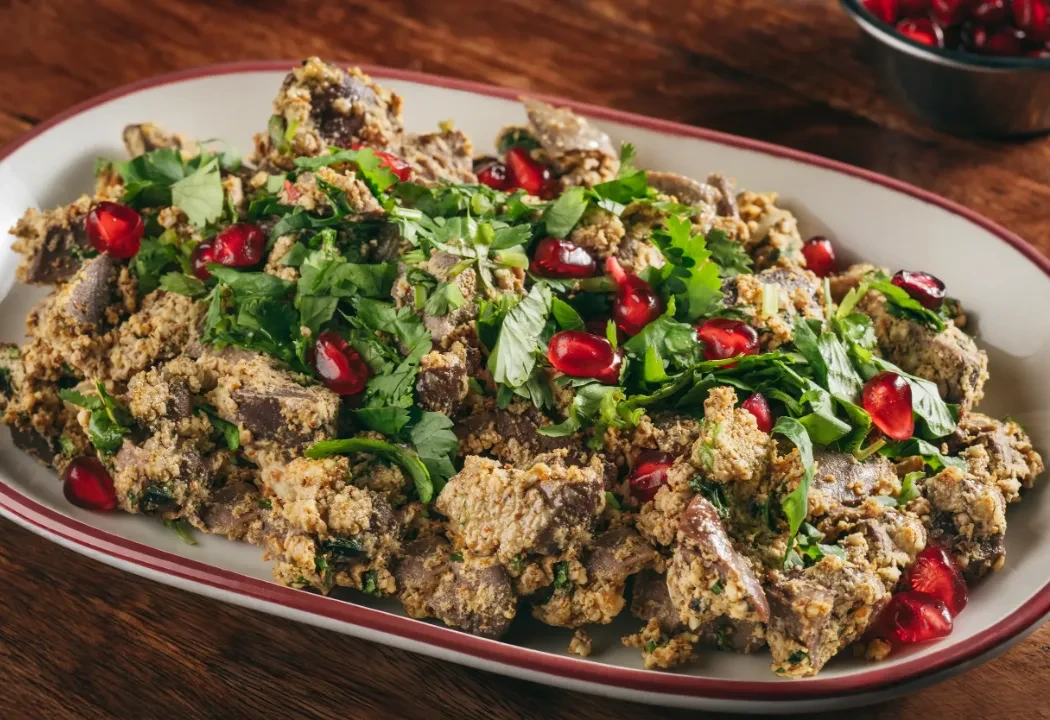
Hot Megrelian kuchmachi with pomegranate and cold pork kuchmachi with walnuts: how the dish is made and which Georgian wine to pair it with at Tsiskvili.
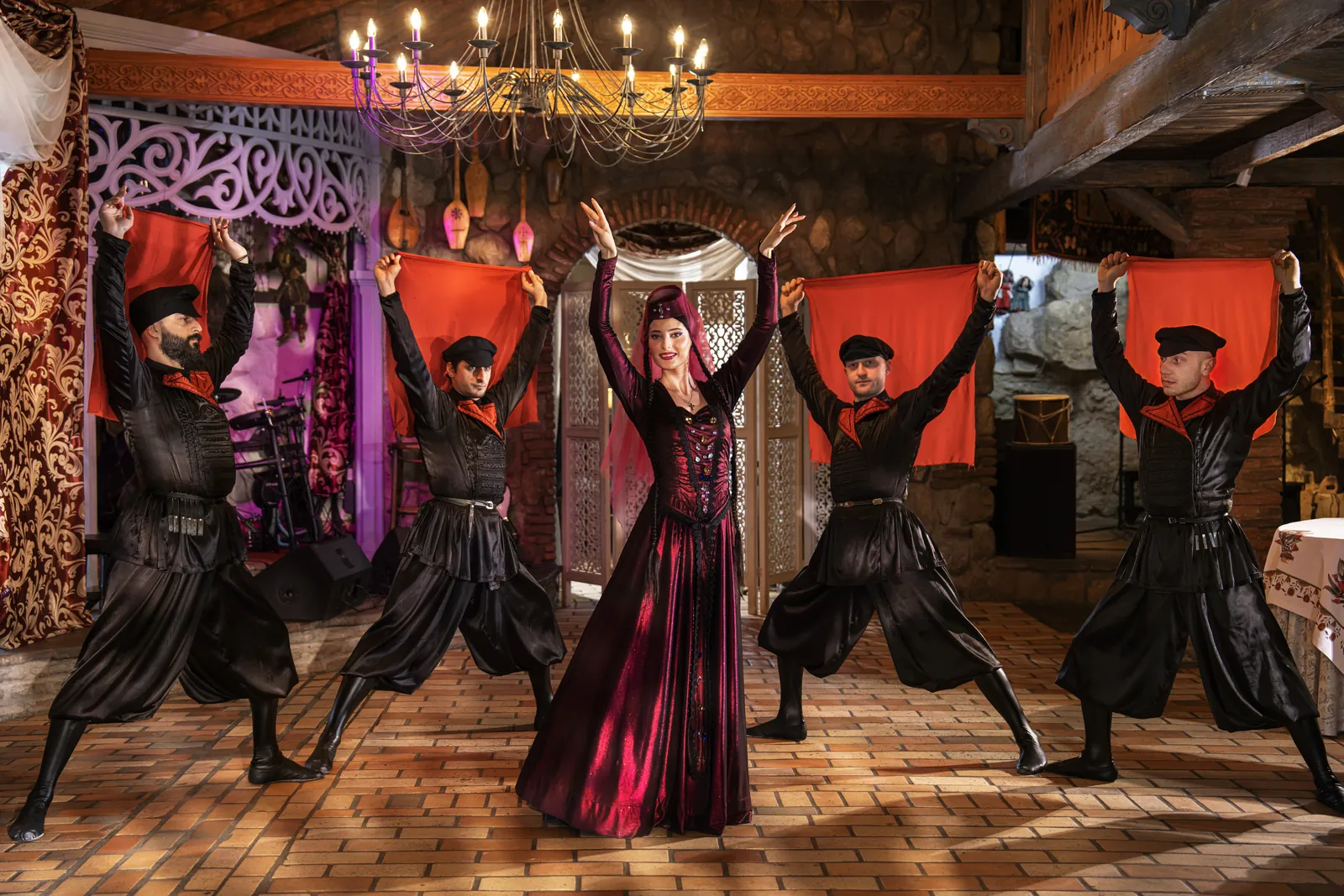
Live polyphonic singing, folk dances and a natural waterfall: what the show at Ethno Tsiskvili includes and how to plan your evening.
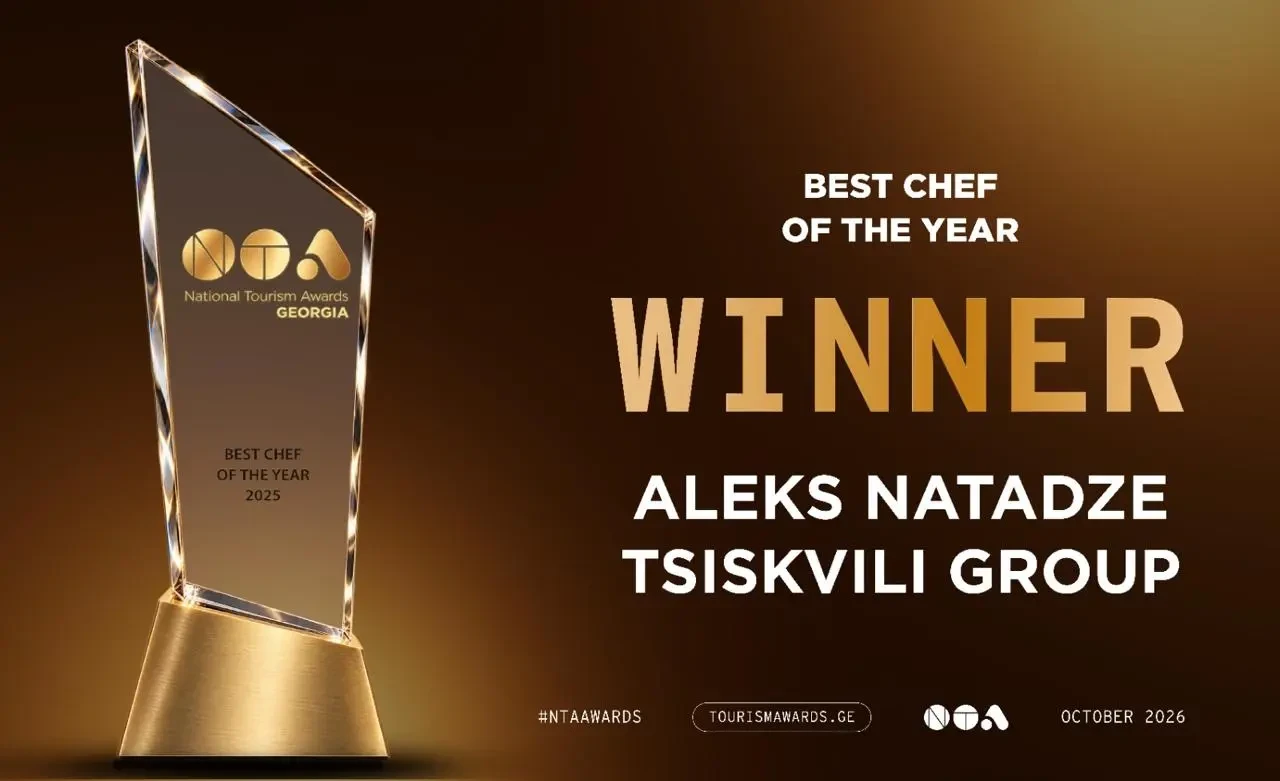
Alex Natadze, Brand Chef of Tsiskvili Group, won the “Chef of the Year” award at the National Tourism Awards.
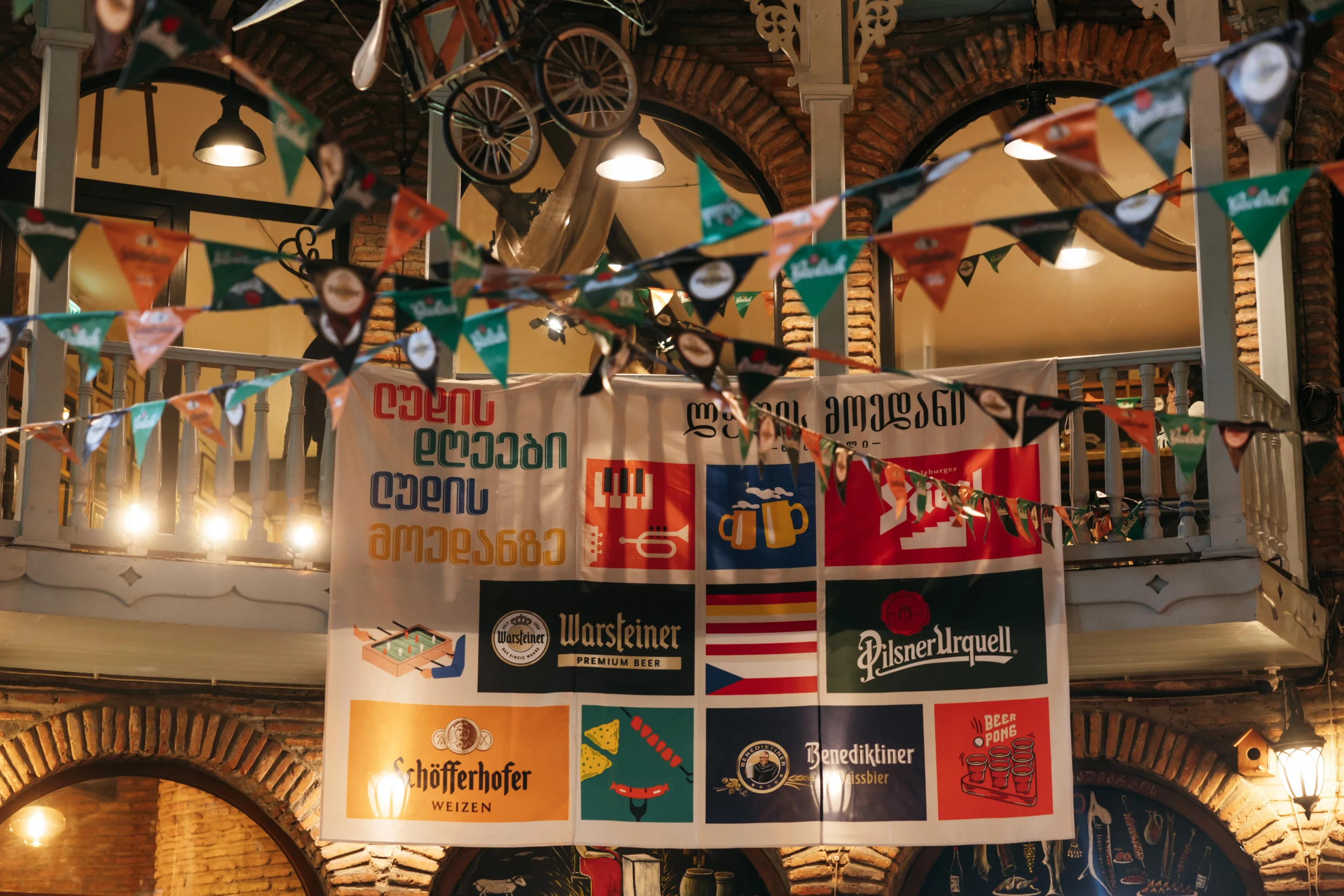
On October 23 and 24, Beer Days took place at Beer Square in Tsiskvili. We welcomed our guests with delicious dishes and premium European beer at half price.
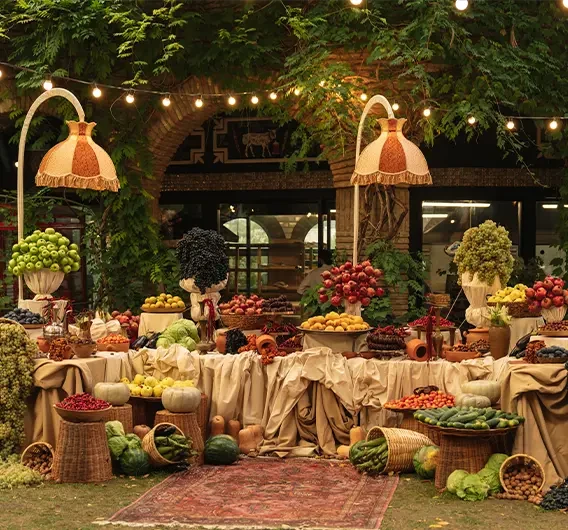
On October 3 and 4, the Tsiskvili courtyard came alive with a true Tbilisi celebration. Over two days, we welcomed our guests with Georgian dance and folklore, delicious tastings, and a variety of activities for both adults and children.
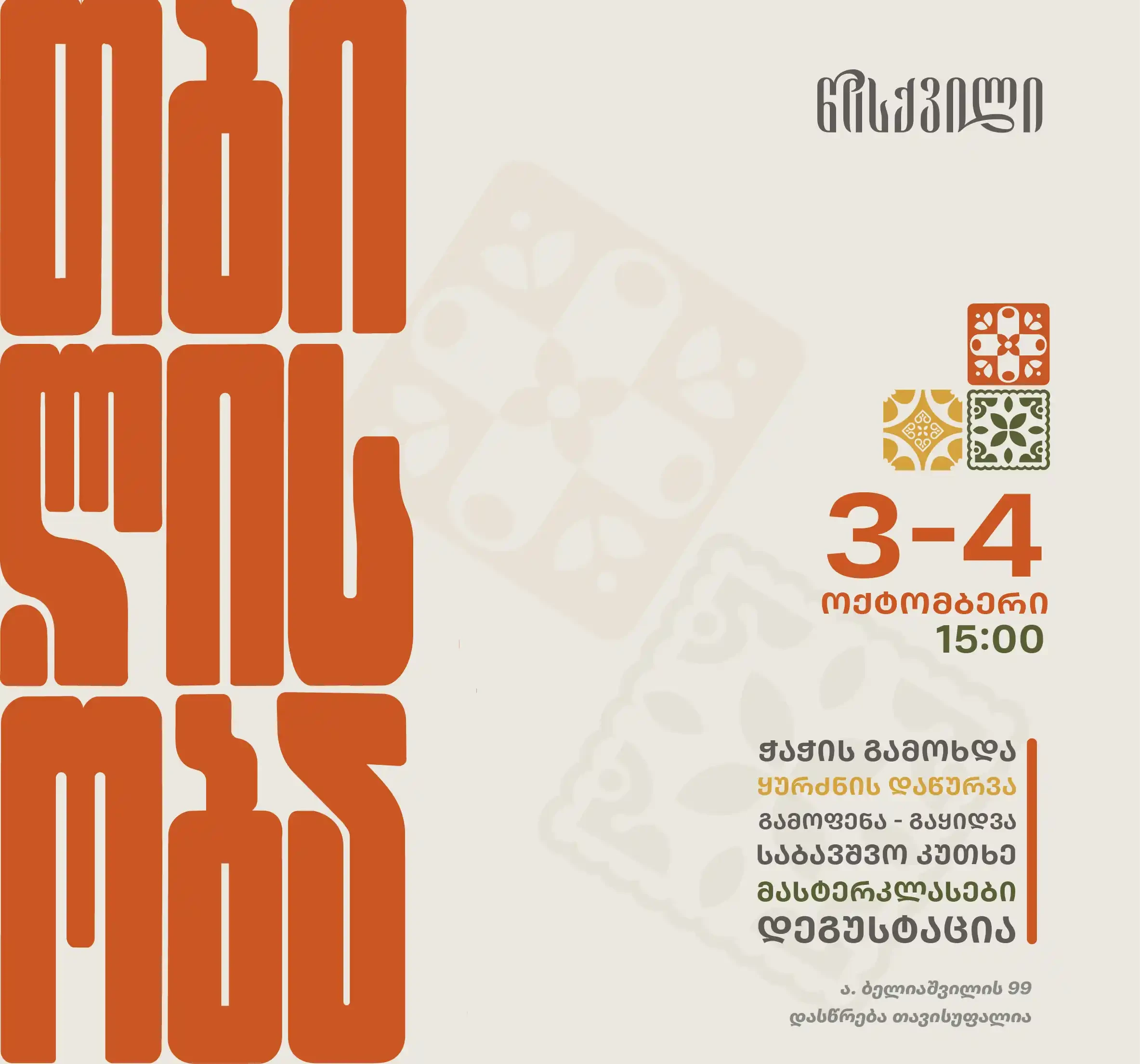
On October 3 and 4, 2026, Tsiskvili Group will celebrate Tbilisoba with a special program.