
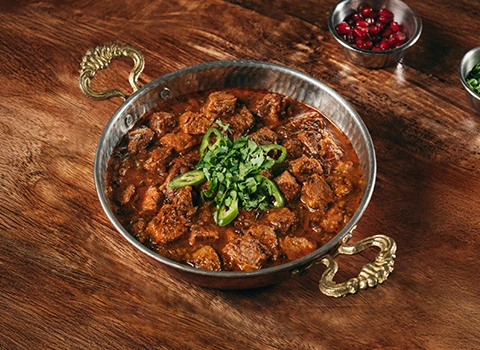
Where to Get a Taste of Authentic Traditional Ostri in Tbilisi
Unlike khachapuri, pkhali, or mtsvadi, ostri is not a dish that appears on a Georgian Supra all that often.
It’s a dish still relatively new to Georgian cuisine and, when ordered, it’s ordered with explicit intention. When ostri does make it to the table, it is often the centerpiece: served on its own or accompanied by just a few simple sides.
Its popularity rises sharply in cold weather, especially in late autumn and winter, and drops quite sharply when summer approaches. Picture a hot clay pan or a deep bowl filled with a slowly simmering, thick, rich red stew. Ostri is not ordered just to satiate hunger; it’s a fast and easy way to warm up and restore energy.
Since ostri is a comparatively recent addition to Georgian food culture (it gained popularity in the mid-20th century), it can sometimes be a subject of debates. People tend to disagree on what truly defines a high-quality, traditional ostri. For many, the benchmark is “the way my grandmother made it,” but we need to keep in mind that family recipes can be pretty out there with ingredient proportions.
Still, there are two points nearly everyone agrees on: the sauce should be neither watery nor overly thick, and the meat must be properly cleaned, well-prepared, and tender enough that a slight tag with a fork can cut it. The Tsiskvili restaurant group meets these standards through strict ingredient selection and precise adherence to a specific cooking technique.
What’s the Secret to Authentic Ostri?
As the saying goes, there are as many opinions as there are family recipes—especially since some circles still debate whether ostri is, in fact, a dish in its own independent right or a simplified version of traditional Georgian Chashushuli.
Even restaurants may sometimes blur the line between the two, which further confuses guests unfamiliar with the nuances. It’s not uncommon to order chashushuli at one place and receive ostri, and experience the opposite somewhere else.
Professional chefs, however, largely agree that the differences are pretty significant if you do dig deeper. Ostri and chashushuli require different techniques, different textures, and even different ingredients.
In chashushuli, the beef is cut into smaller pieces and gently stewed in its own juices and wine, resulting in a relatively light consistency. Ostri, by contrast, uses larger cuts of meat that are first seared in fat (without wine), then cooked with tomatoes (or tomato paste) and spices. Red adjika and coriander are non-skippable ingredients. Ostri should be thicker than traditional chashushuli and unmistakably spicy, its place firmly close to the top of Georgian spicy dishes (its name “ostri” is derivative of Russian “острый”/spicy). The meat should be so tender that you shouldn’t have to ask for a knife to cut it, yet still hold its shape—never falling apart into small fragments, as it might in dishes like kharcho.
Yet, it’s no surprise that ostri and chashushuli are frequently confused. The details such as the size of meat cuts, the presence or absence of wine, and the ratio of meat to tomato sauce are often overlooked in Georgian home cooking, so the lines may get a tad more blurred here and there. That, however, isn’t an excuse for a professional chef.

What Makes Tsiskvili’s Ostri Special?
At Tsiskvili, our chefs pay special attention to the cooking technique, the quality of ingredients, and most importantly—properly balancing it all, which is essential for a truly authentic ostri. The most important ingredient is beef. We use only fresh cuts of lean, tender meat. The process is slow and deliberate: low heat and patience are essential to cooking the meat properly and naturally thickening the sauce.
Tsiskvili also places great emphasis on spice quality. In ostri, red adjika and coriander brought from western Georgia largely determine the depth and intensity of flavor. Adjika adds a short of heat that’s necessary to cut through and balance the richness of the meat.
When served, ostri should be piping hot, with meat chunks generously coated in sauce.
What Should You Pair Ostri With?
Ostri’s first and best companion is Shoti Bread. Breaking shoti by hand and dipping it into the sauce is an accepted (and expected) part of eating it. Leaving sauce behind or dunking the bread in using utensils is considered just as much a breach of Georgian etiquette as eating khinkali with a fork.
Many guests also enjoy ostri with other side dishes with neutral flavors, such as mashed potatoes or rice. They help soften the sauce’s intensity.
As for drinks, ostri is one of the few Georgian dishes that does have a widely accepted traditional pairing. In cold winter months, it is almost always accompanied by chacha (or vodka, if chacha isn’t available). It’s believed that strong spirits balance both the richness and heat of the dish, yet they are neutral enough not to overpower or water down its distinct flavor.
If strong spirits aren’t to your taste, the best alternative would be a full-bodied red wine with firm tannins. Tannins and lower acidity complement ostri’s intense flavor profile to create a naturally balanced pairing. Sommeliers usually advice to pair it with Saperavi (especially qvevri-aged), as well as certain more tannin-heavy versions of Mukuzani and Aleksandrouli.
Enjoy Ostri In Traditional Georgian Atmosphere Created by Tsiskvili
The setting matters when it comes to flavor. Ostri is a rich, hearty dish often enjoyed over several hours with friends, a situation that tends to call for more than a few toasts. A calm, welcoming atmosphere makes the experience far more comfortable and enjoyable than, say, a cramped dark ambience.
Tsiskvili restaurants in Tbilisi, Tskneti, and Mtskheta are designed to offer exactly that. Especially in busy districts such as Dighomi or Saburtalo, these spaces allow you to step away from the city’s noise and fully focus on spending your time surrounded by a pleasant (and tasty) atmosphere, often created using traditional Georgian elements.
To find the address of the Tsiskvili restaurant closest to you, follow the link. To reserve a table, call +995 032 2 00 55 55.
Other news

Live polyphonic singing, folk dances and a natural waterfall: what the show at Ethno Tsiskvili includes and how to plan your evening.
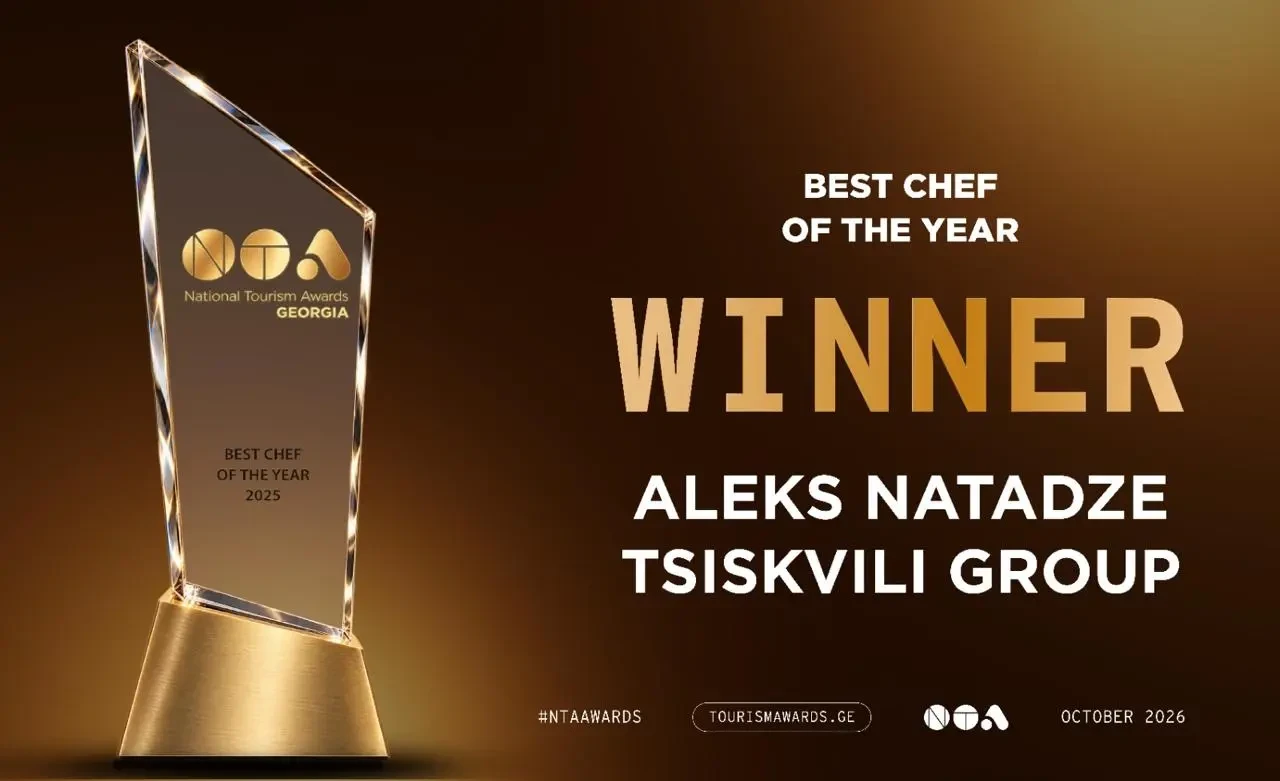
Alex Natadze, Brand Chef of Tsiskvili Group, won the “Chef of the Year” award at the National Tourism Awards.

On October 23 and 24, Beer Days took place at Beer Square in Tsiskvili. We welcomed our guests with delicious dishes and premium European beer at half price.
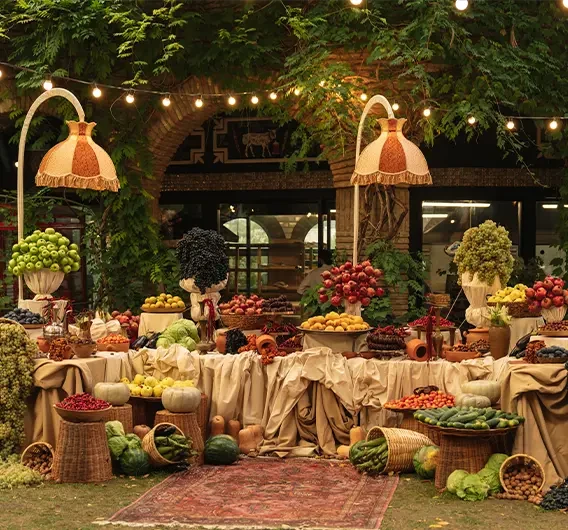
On October 3 and 4, the Tsiskvili courtyard came alive with a true Tbilisi celebration. Over two days, we welcomed our guests with Georgian dance and folklore, delicious tastings, and a variety of activities for both adults and children.
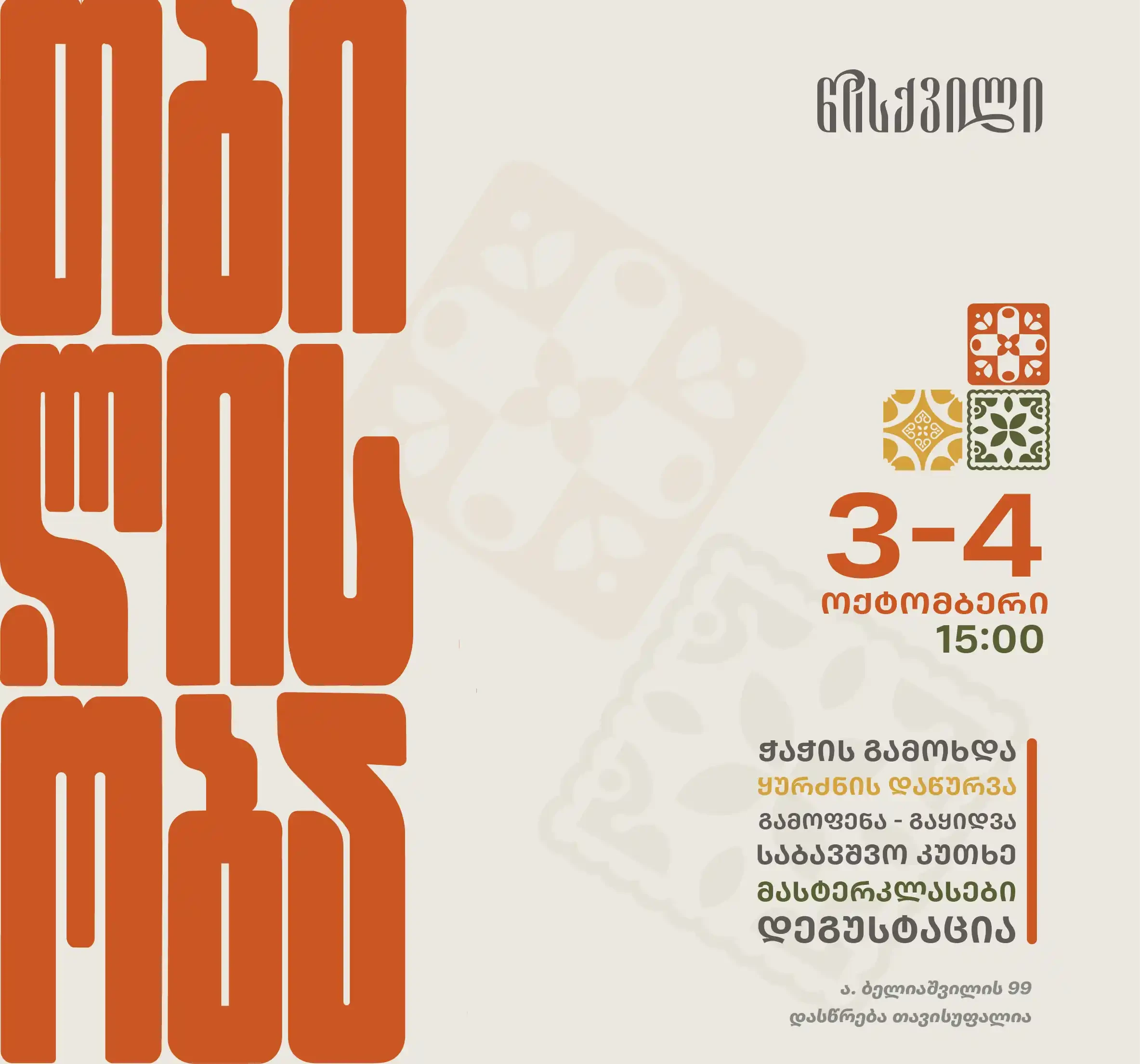
On October 3 and 4, 2026, Tsiskvili Group will celebrate Tbilisoba with a special program.
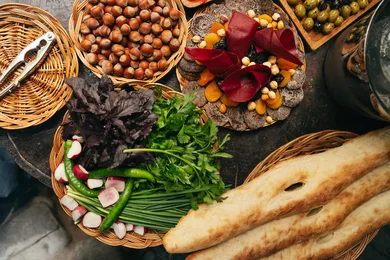
Discover the ultimate one-day food itinerary in Tbilisi, starting with fresh bread in the Old Town and ending with a grand Georgian feast. Experience the city’s rich culinary heritage through local specialties like Khinkali and live folklore performances at the iconic Tsiskvili restaurant.